27 May 11
Helix/Scaffolding #21211 study Blue
2 minutes
exquisite corpse contributors:
Michael Ready, Ron Skylstad, Cynthia Pederson, Gustavo Santaolalla, American Association of Museums' Center for the Future of Museums, Badger (Beth) Merritt, Guzel DuChateau, Ben Fountain
Natural History
With a bite of the Pleistocene
today's brutal winds hint at history,
how winds once scoured our glacial plain,
how even now they'd like to suffocate us
deep in spring-plowed dust and reclaim
our hard-used land.
On my mailbox letter-trek late in the day
I am arrested by death,
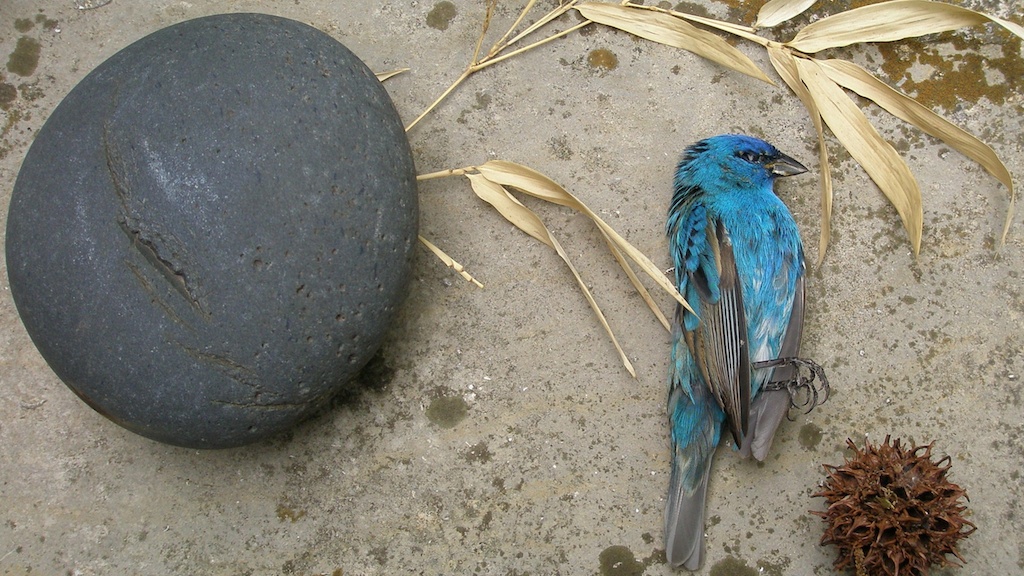
by rich indigo plumage below a brick wall:
one broken bunting,
fragile casualty of this unrelenting wind.
Do you know how it howls, scalping
your nerves; how wind dries up everything
inside you; how, on days like this,
you can't think past its incessant pitch and push.
Others name this:
simoom, pampero, bora. . .
I can only stand against it.
I can only stop, stoop and stroke
this indigo bunting.
I'd like for there to be some meaning
in this feathered death.
Science or the Divine,
it's still about how we find meaning.
What a tiny, exquisite corpse,
this beauty that has no weight
but pure color.
Cynthia Pederson
Ben Fountain:
How strange and utterly logical that Tracy Hicks' intense engagement with the natural world would lead him down into the guts of the museum storage room, this windowless, climate-controlled, rigorously inventoried place with its zeroed-out funk of alcohol and slow decay. Maybe the real crux of the man-nature mashup lies here, as opposed to the grocery store or the kitchen table. We all understand the need to feed ourselves, but the impulse that drives a child to collect feathers or interesting rocks, this is a real human mystery that Tracy Hicks is trying to crack. Just as a kid collects feathers and rocks for the pleasure they give, perhaps we should view the museum as a highly elaborate blowup of various pleasure centers in the human brain--the pleasure that the scientist takes in knowing; that the collector takes in having; that the historian takes in preserving; and that the aesthete takes in order, proportion, paradigm and variation. This is the territory Tracy Hicks is working, the intersection of science, culture, and nature where the human world happens.